
Sensitive Periods: The Secret Recipe Behind Athletic Development
Everyone knows that good bread needs the right ingredients, and most importantly, time. You can’t mix flour and water and expect a fluffy loaf five minutes later. In the same way, a young athlete needs to develop gradually, step by step, without rushing and with respect for natural motor development.
Movement skills also don’t follow one another neatly like subjects on a school timetable. They overlap, connect, and support each other. Much like dough rising while the oven slowly heats up.
Sensitive Periods: When Does the Dough Rise Best?
Every experienced baker knows that dough needs the right moment. If it’s too cold, it won’t rise. If you leave it too long, it overproofs and loses elasticity. Sensitive periods in child development work the same way. They are phases when certain motor skills can be learned faster and more effectively than at any other time.
If we catch that window, development almost seems to happen naturally. If we miss it, improvement is still possible, but it takes more time and effort.
What’s important to understand is that no skill develops in isolation. Everything is interconnected. Coordination supports speed. Speed helps build strength. Endurance improves technique. Mobility allows smooth and efficient movement.
If we want to prepare a well-rounded athlete, we need to mix the dough patiently and with care.
Ingredients:
- 1 handful of playfulness
- 2 tablespoons of patience
- 3 pinches of encouragement
- 5 cups of joy in movement
- 1 starter of opportunity
- Season with discipline and creativity to taste
Method:
1. Start with the base – coordination (ages 7–11)
This is the core dough. Without it, nothing works properly. During this period, children absorb movement patterns like a sponge absorbs water. They quickly learn to catch a ball, balance, and move with agility.
How to support it? Focus on movement games, gymnastics, cycling, climbing trees, and varied physical activity. Well-rounded training allows motor skills to rise beautifully. And even if a child later specializes in one sport, coordination will continue to grow and connect with other abilities.
2. Add speed (ages 7–14)
At this stage, children develop reaction speed and movement speed most effectively. It’s not that speed can’t improve after fourteen. It simply develops more slowly and requires a different approach.
How to support it? Short sprints, tag games, ball games, relays, fun obstacle challenges. Speed exercises work best when combined with coordination, so children learn to move not only quickly, but also with proper technique.
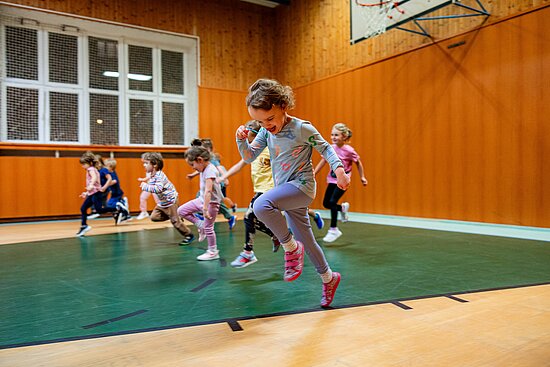
3. Bake in strength (ages 10–16)
Girls often begin building strength slightly earlier than boys, but for both, timing matters. While strength develops most during adolescence, the foundations are laid much earlier through bodyweight exercises, climbing, and playful strength challenges.
How to support it? Squats, push-ups, rope climbing, climbing frames, natural movement. Strength development for children should be playful, safe, and connected with coordination and speed.
4. Let endurance rise slowly (ages 11–14 and beyond)
Endurance builds gradually, but it creates lasting resilience. It’s important not only for runners or swimmers, but for all children who want to handle training without excessive fatigue.
How to support it? Longer runs, swimming, cycling, hiking… anything that strengthens overall stamina. Whether as part of structured training or natural family activities, movement should feel enjoyable, not like endless laps around a field.
5. Finish with mobility (ages 5–12)
Childhood is the ideal time to develop mobility, as muscles are naturally flexible. Still, mobility is a lifelong project. If it’s not maintained, it gradually fades.
How to support it? Stretching, simple yoga elements, gymnastics, dance. But never by force. The goal is a healthy, functional body. Not breaking flexibility records. Movement activities should be about well-being, not pressure.
And Now, Let It Rise!
Every athlete, just like good bread, needs time. Skills overlap, build on one another, and strengthen each other. Along the way, sport-specific skills are added naturally on top of these foundations.
If we rush the process, instead of a beautiful loaf, we end up with something flat and disappointing. So stay patient, keep the joy in movement alive, and avoid unnecessary pressure.
Enjoy the process and the love of sport.